2025
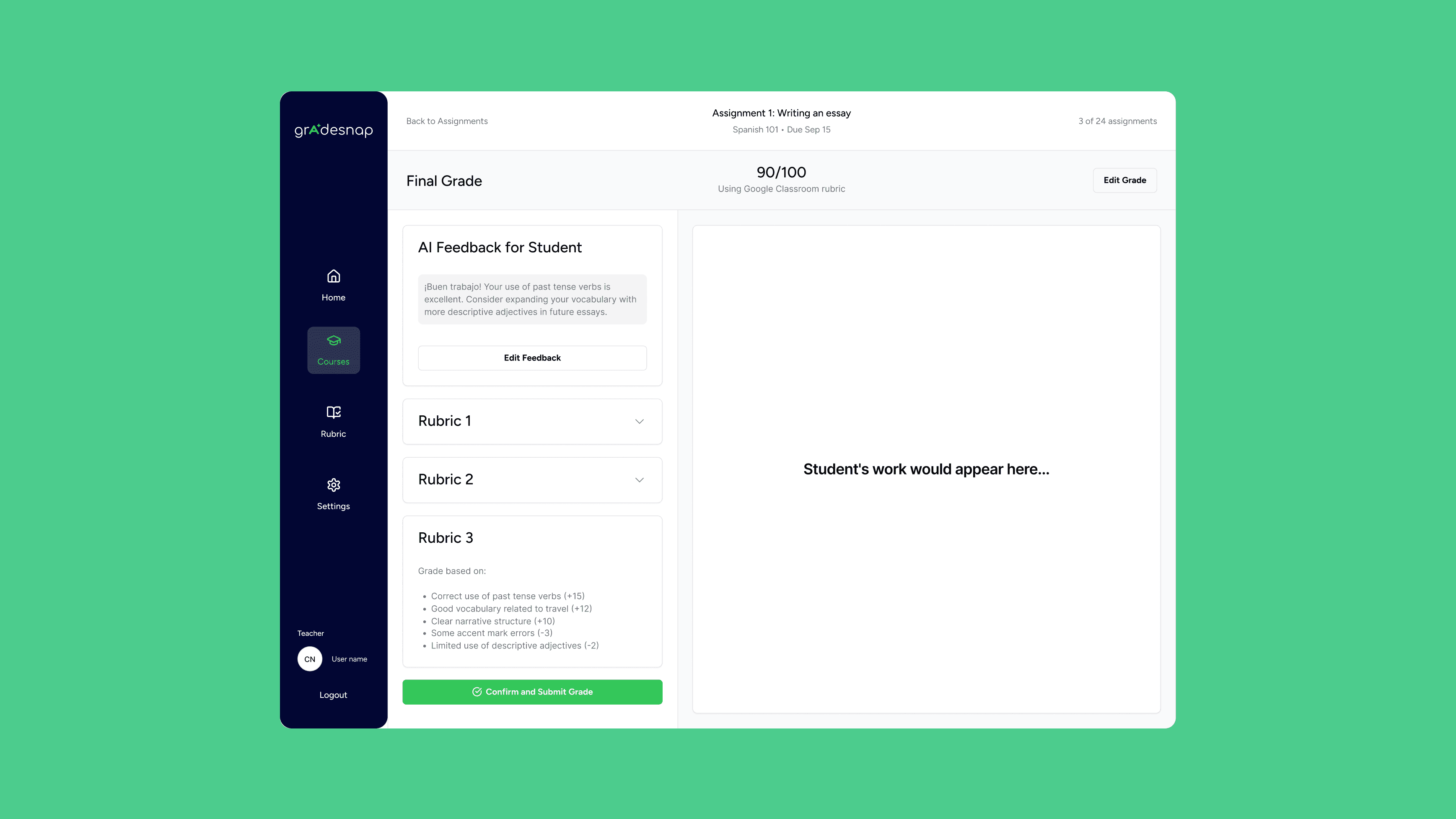
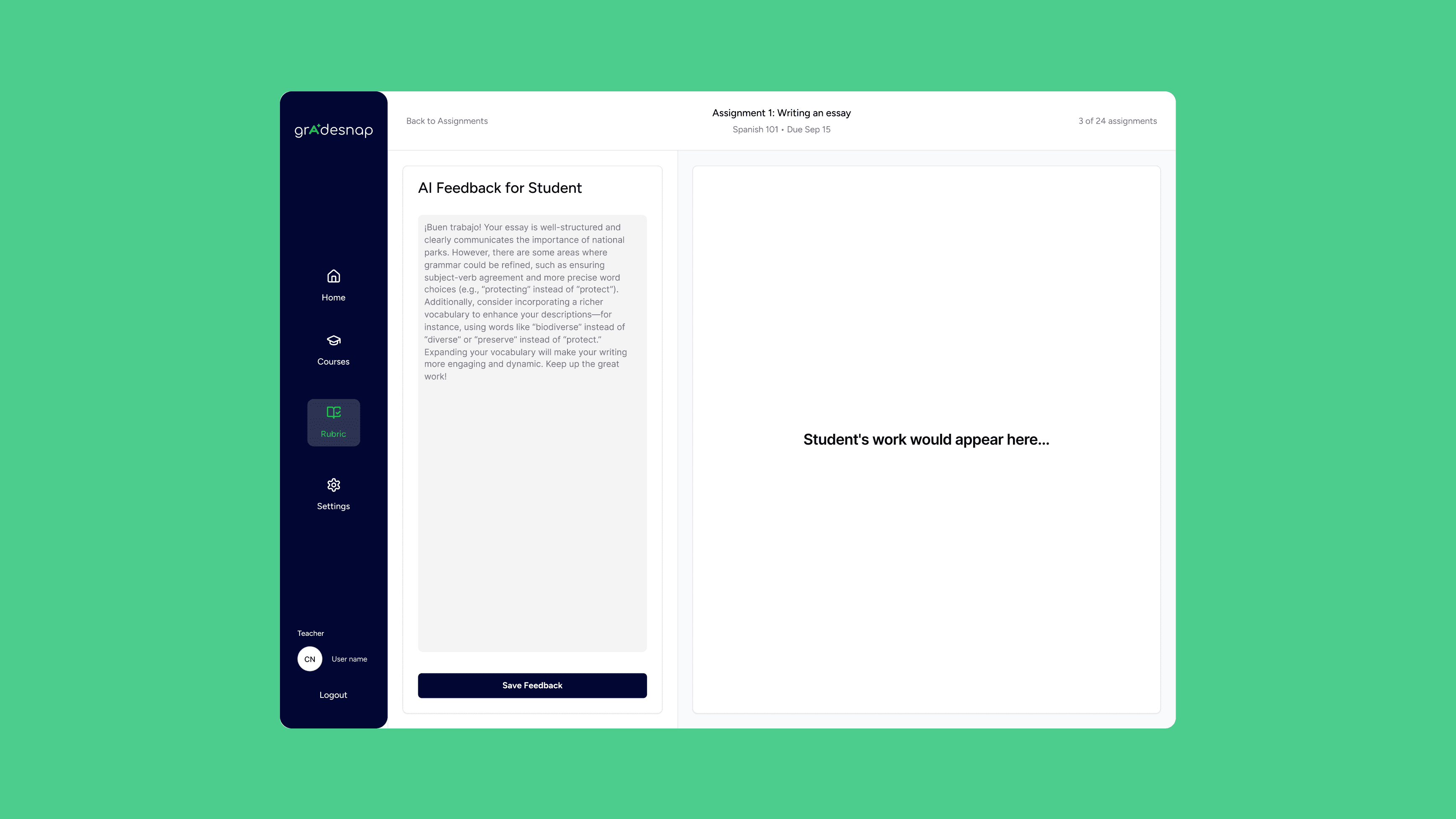
I contributed to end-to-end UX design for GradeSnap, an AI-powered grading tool built to integrate with Google Classroom, within a five-week hackathon sprint. As a former K-12 educator, my firsthand classroom experience directly shaped the team's research approach and key design decisions throughout the project.
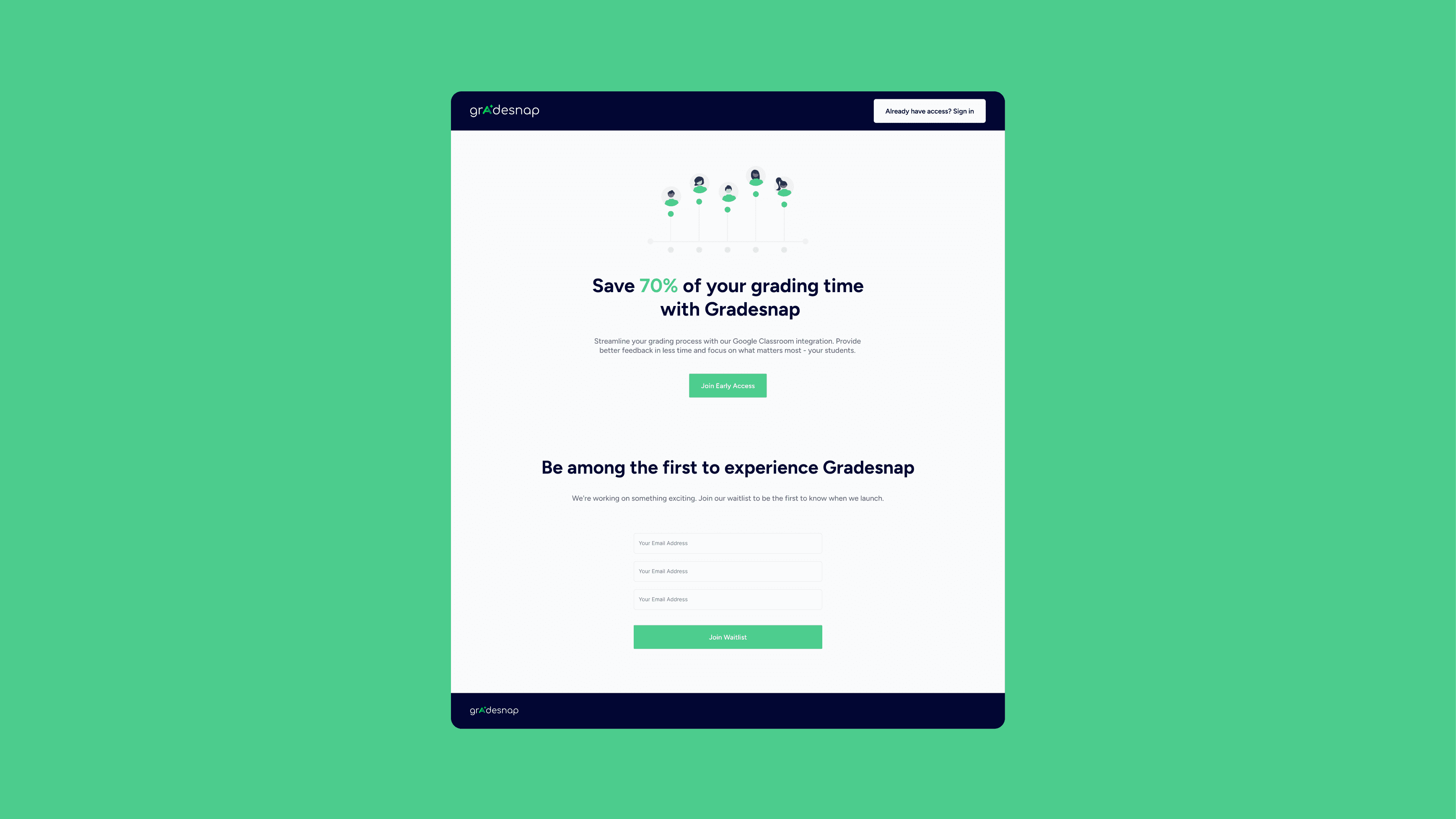
Our solution reduced teacher grading time from 20 minutes to 4 minutes per assignment, a 5x efficiency improvement validated through usability testing. We placed 5th overall and were featured on the NYC EdTech Hackathon website.
Team: Cross-functional (engineering, UX, PM)
Role: Design Research & Interaction Design
Timeline: February–March 2025

Framing the Opportunity
Grading Is a Systemic Strain
Teachers report working ~54 hours per week.
Writing assignments, while critical, are among the most time-intensive tasks.
In interviews, one teacher shared:
“Sometimes I spend four hours grading just one class. I love teaching, but I’m exhausted.”
Existing tools organize assignments, but don’t meaningfully support feedback workflows.
We asked:
How might AI assist teachers without replacing their judgment?

Research Sprint
Understanding Workflow & Friction
In Week 1, we conducted:
5 semi-structured interviews with K–12 teachers
Competitive analysis of Gradescope, Crowdmark, and GradeMate
We mapped grading workflows and tensions:
Feedback fatigue
Cognitive load during rubric scoring
Weak Google Classroom integration across existing tools
Translating Insight Into Concept
GradeSnap
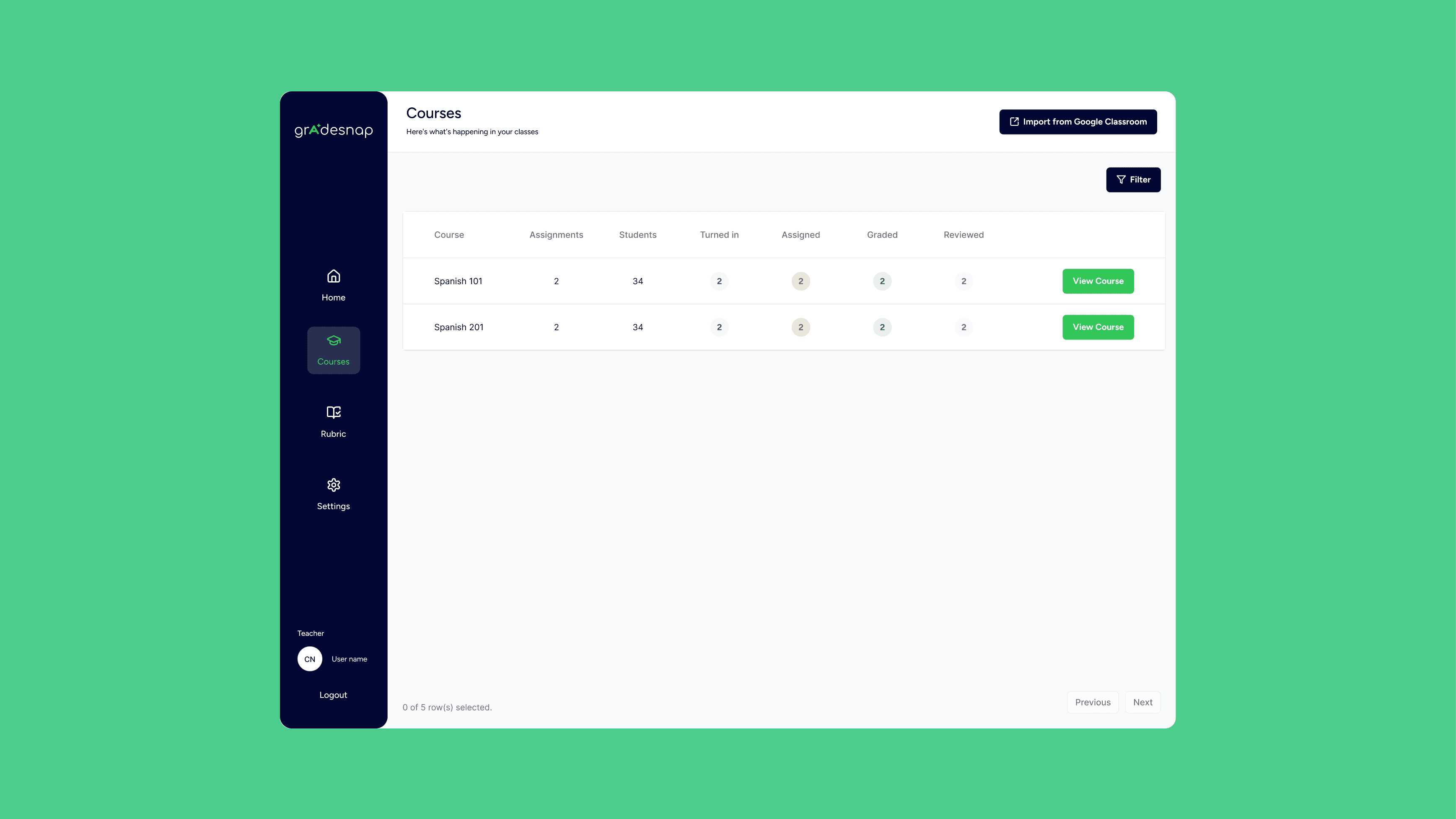
We prototyped an AI-assisted grading flow:
Sync assignment from Google Classroom
AI generates rubric-aligned draft feedback
Teacher reviews, edits, approves
Scores + feedback return in one click
The teacher remains the decision-maker.
AI functions as cognitive support.


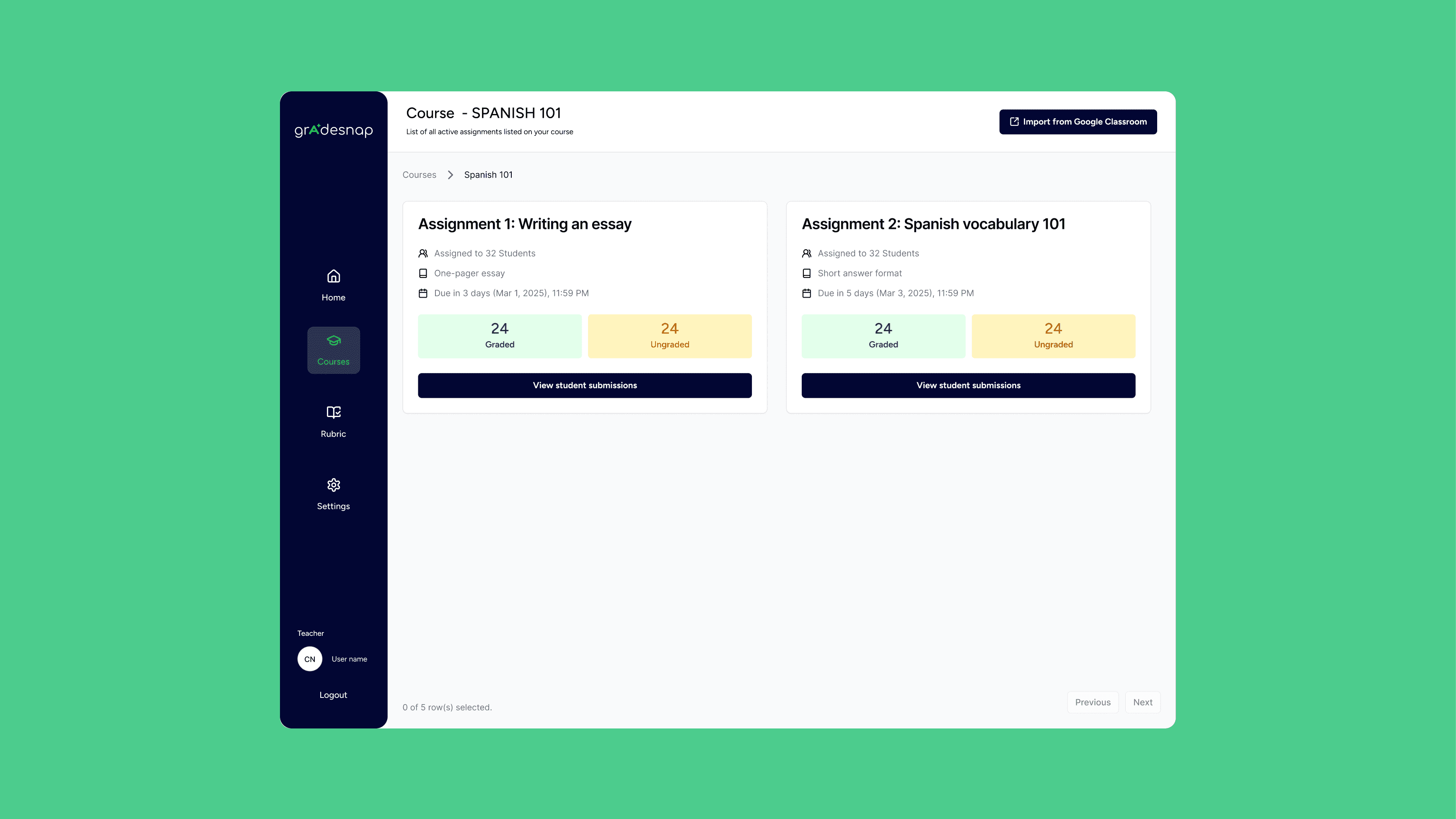
Final Product
What This Reinforced
Speed doesn’t eliminate rigor.
AI tools must respect professional expertise
Systems thinking applies even in compressed timelines
This project reinforced my interest in designing tools that reduce cognitive load without removing human agency.