2025
I served as co-researcher and designer on this project, conducting focus groups, thematic coding, participatory design workshops, and three design sprints for a perinatal health platform. Our findings directly reshaped product scope, expanding to include Black fathers as central participants and shaping 3 feature directions.
Role: Co-Researcher & Designer
Methods: Literature review, focus groups, thematic analysis, ATLAS.ti, comparative analysis (MARS scale), participatory design, affinity mapping, cognitive walkthroughs
Collaborators: Thesis partner, advisors, HCI experts, public health researchers
Master’s Thesis | 2024–2025

The Research Question
What We Asked
We began with three questions:
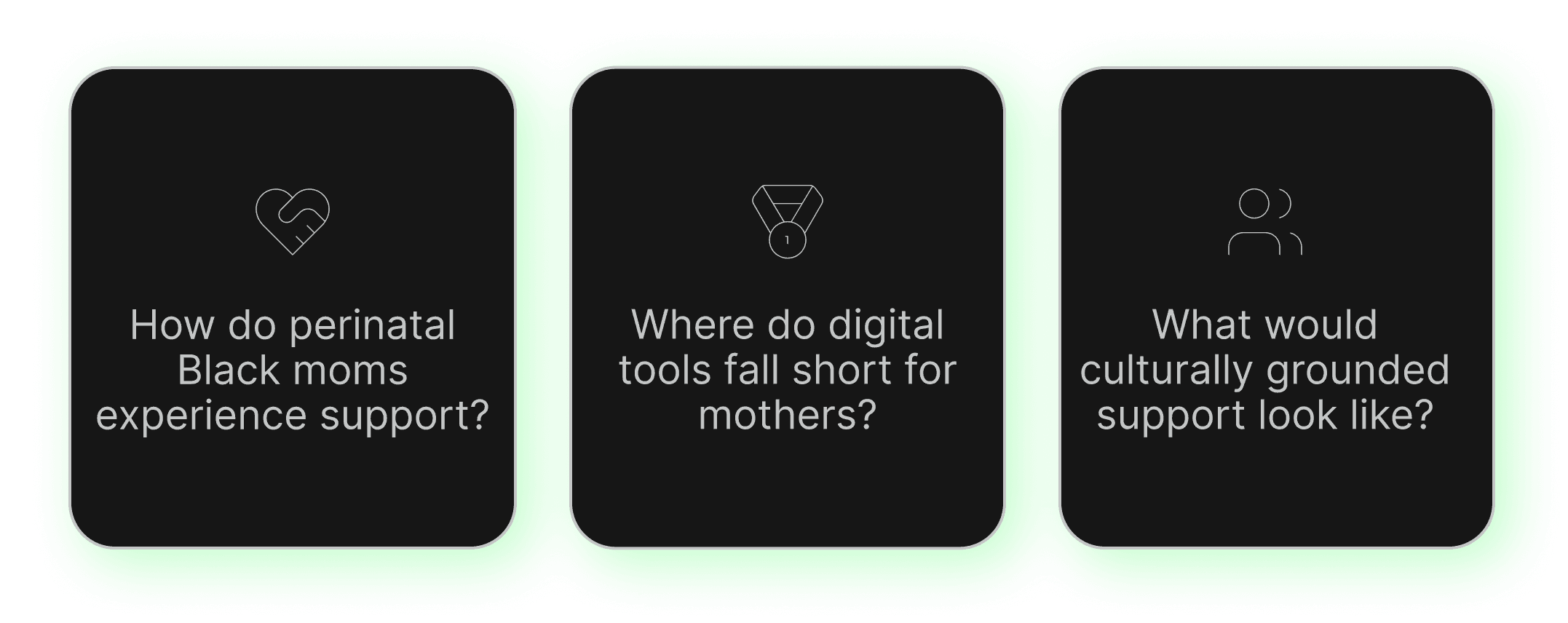
We started with a literature review to understand what was already known about Black maternal health before conducting our own research.
This led us to a central focus:
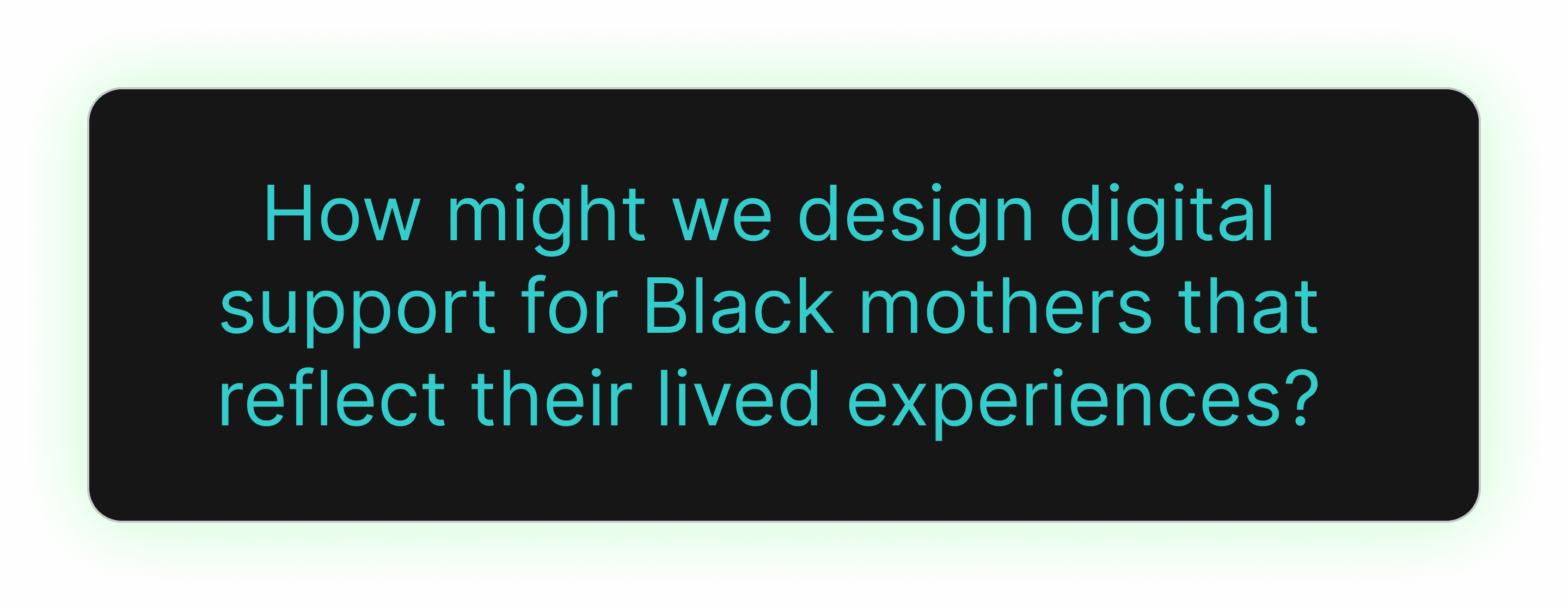
The Problem
"I’m doing everything alone. It’s exhausting." — Focus Group Participant
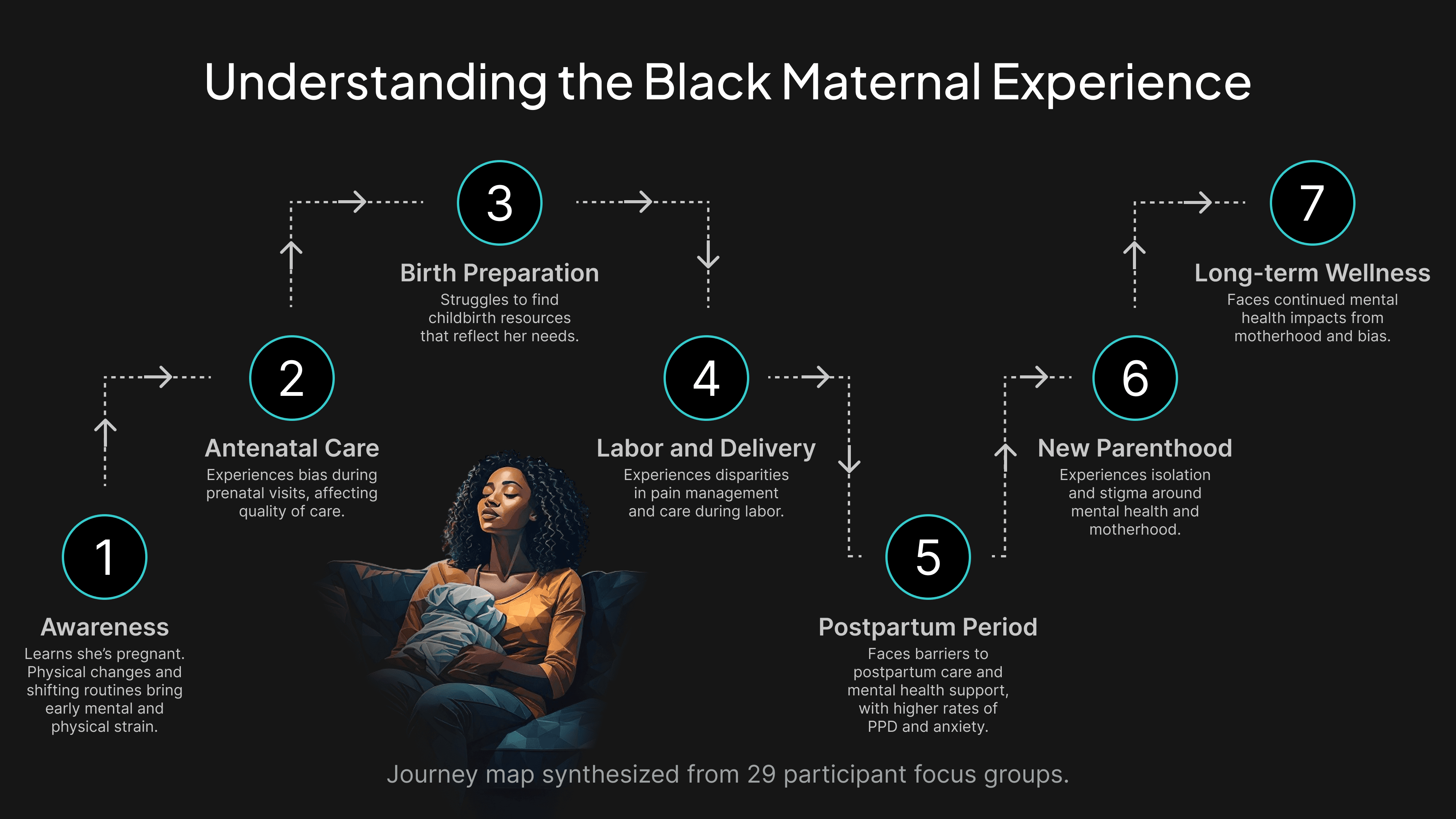
Black mothers face higher pregnancy-related risks and often lack support that reflects their lived realities. To understand where support breaks down, I mapped stress, isolation, and unmet needs across the perinatal journey.
The journey map surfaced where emotional support consistently broke down across the perinatal timeline.
What We Heard
Why We Chose Focus Groups
We piloted our protocol, then conducted six 90-minute focus groups with 29 Black perinatal moms.
We chose focus groups over individual interviews to create shared storytelling. What emerged was a kind of sisterhood, women validating experiences they had each carried alone.
Thematic Analysis
Using thematic analysis in ATLAS.ti and a shared codebook developed iteratively with my research partner, we synthesized insights across all six sessions. When context affected interpretation, we returned to the original recordings to align on codes.
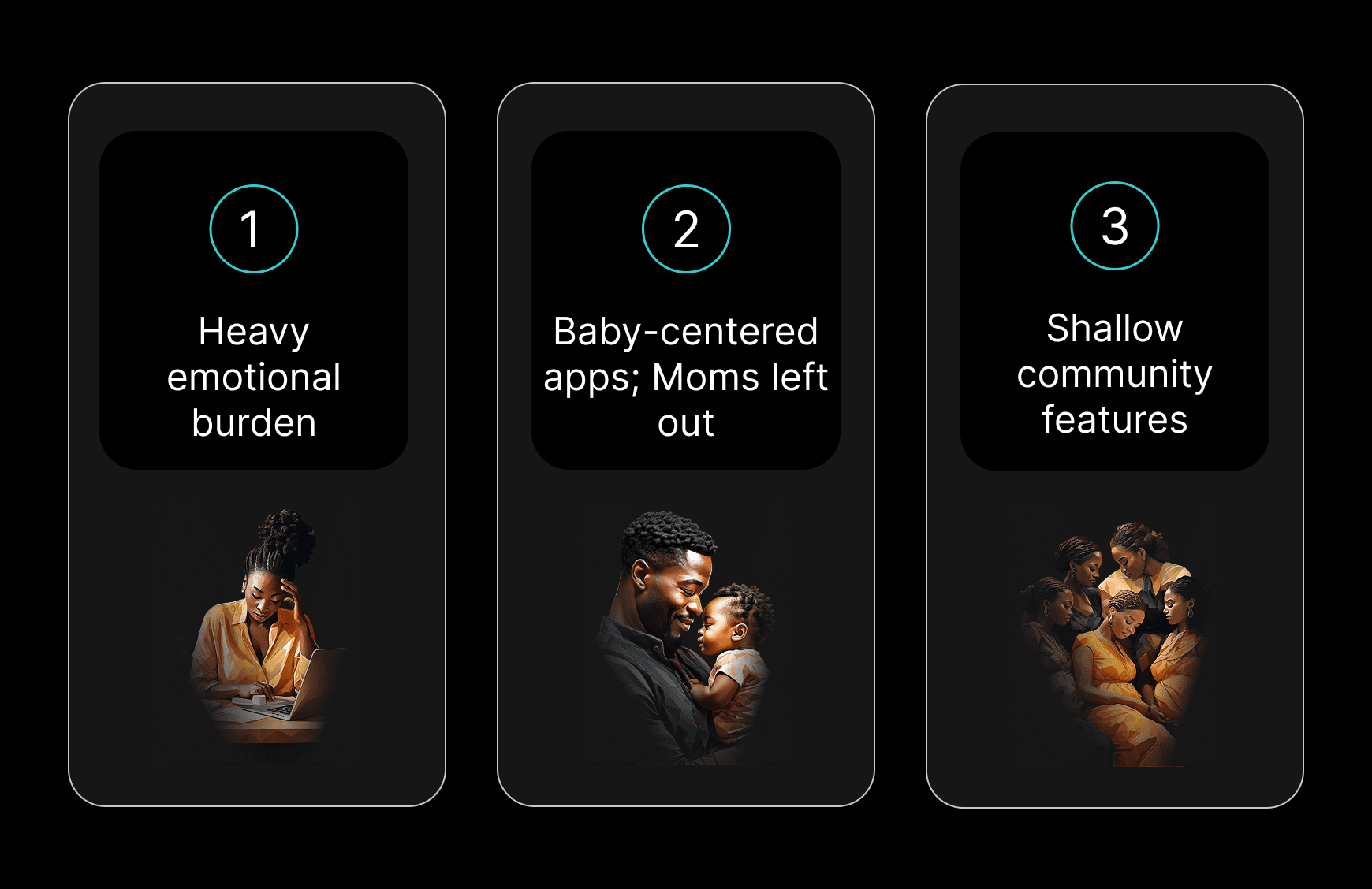
Three patterns surfaced:
A Pivot Grounded In Data
Our original hypothesis: an AI-powered wearable to help Black women manage stress and blood pressure during the perinatal period.
After analyzing our focus group data and completing a comparative analysis of 53 maternal and mental health apps, including every app moms mentioned using for support, from traditional maternal health tools to social media platforms like TikTok, the same conclusion emerged for both of us independently. Participants weren't asking for biometric tracking. Instead, they asked for connection, support, and to be seen.
With two months remaining, we pivoted. The pivot was the research working exactly as it should.

From Insight to Direction
Before designing anything, we went back to the people.
The Co-Design Workshop
We piloted our workshop protocol with 5 HCI experts, then facilitated a 90-minute co-design workshop on FigJam with 5 perinatal mothers and select healthcare professionals including doulas, midwives, and lactation consultants. Healthcare experts responded to specially coded prompts, marked with a symbol, to distinguish their clinical perspectives from participant responses.
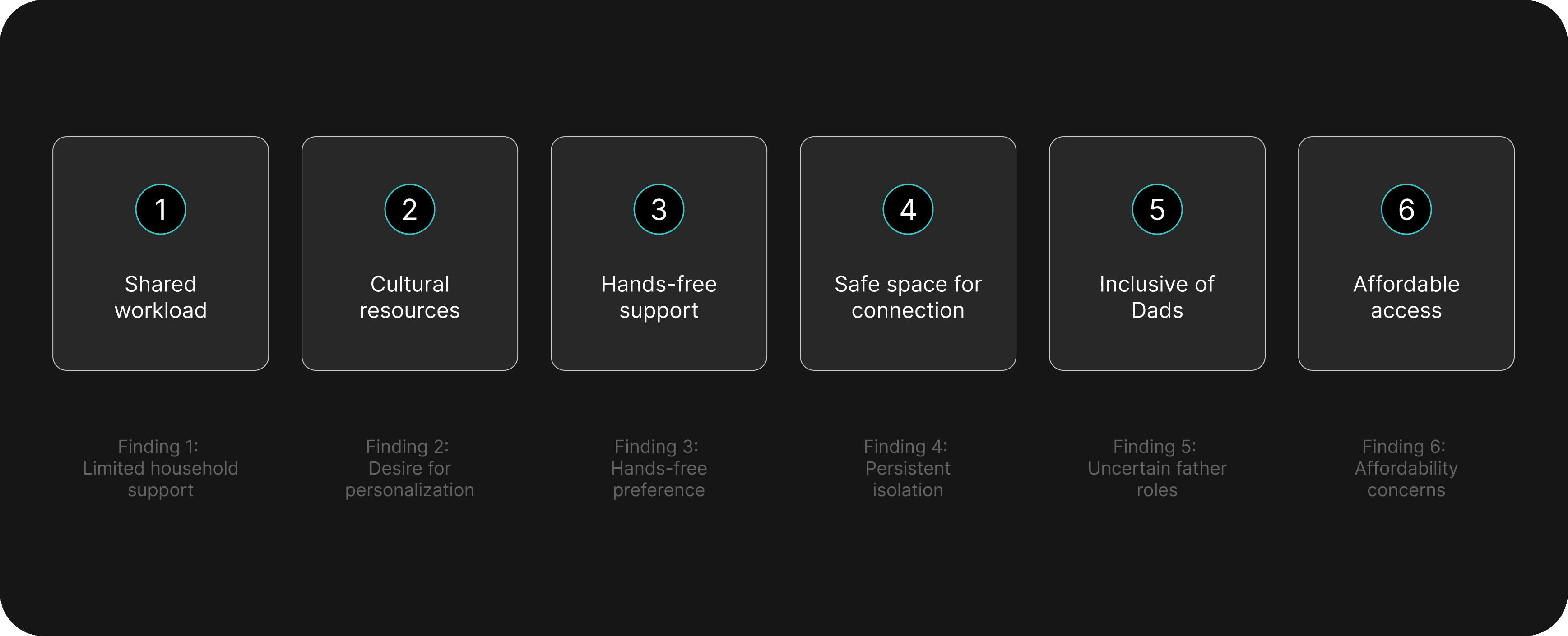
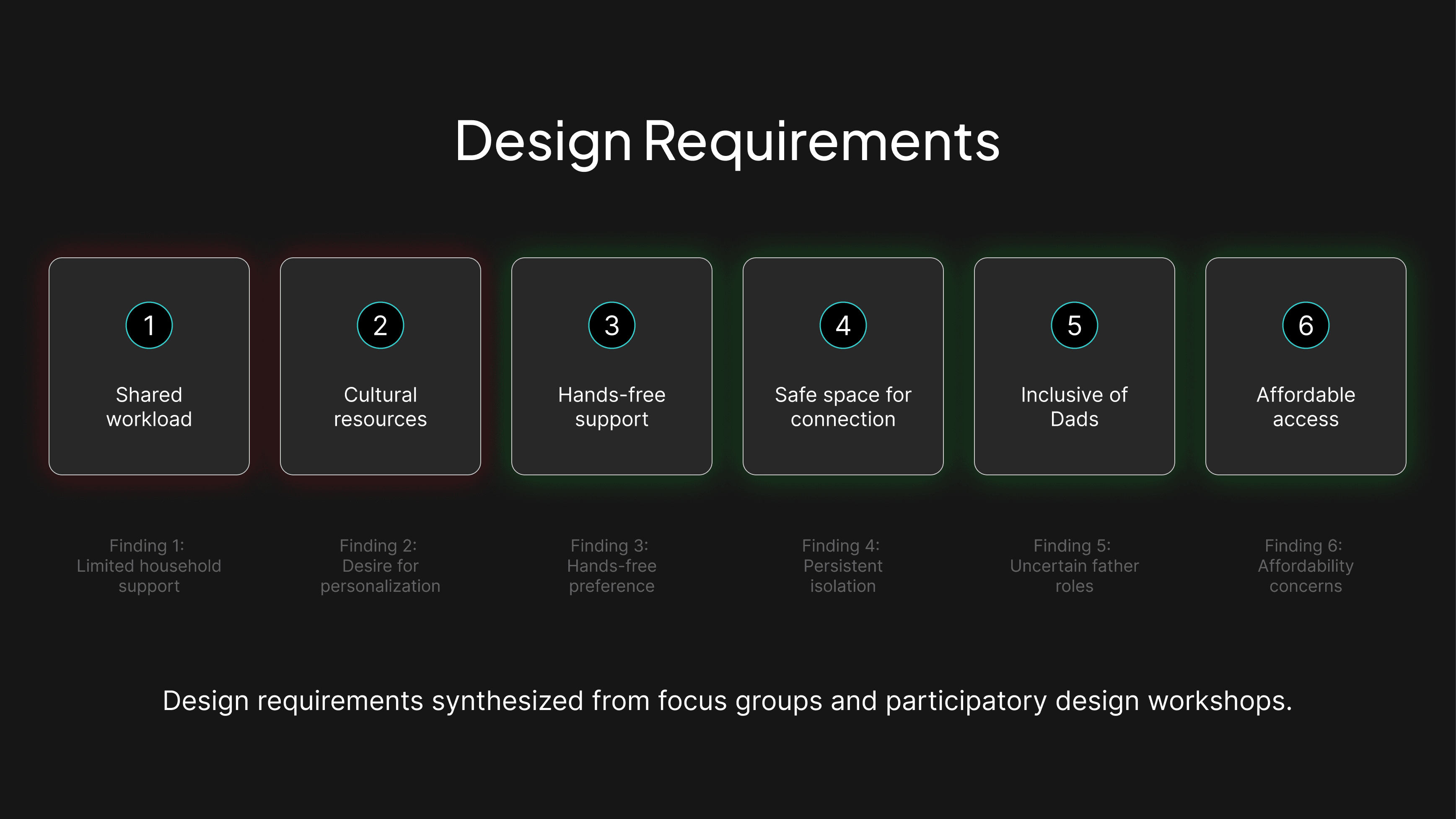
In the workshop, moms imagined themselves as superheroes designing tools every mother should have. Using affinity mapping to synthesize what emerged, six themes surfaced:
The Fathers Finding
This wasn't new. Across all six focus groups, Black fathers wanting to be involved had surfaced repeatedly. The co-design workshop confirmed it. Fathers wanted to support their partners but didn't know how. This finding formally expanded the scope of the entire project.
Three Design Sprints
Each sprint tested a direction. Each one taught us something we hadn't expected.
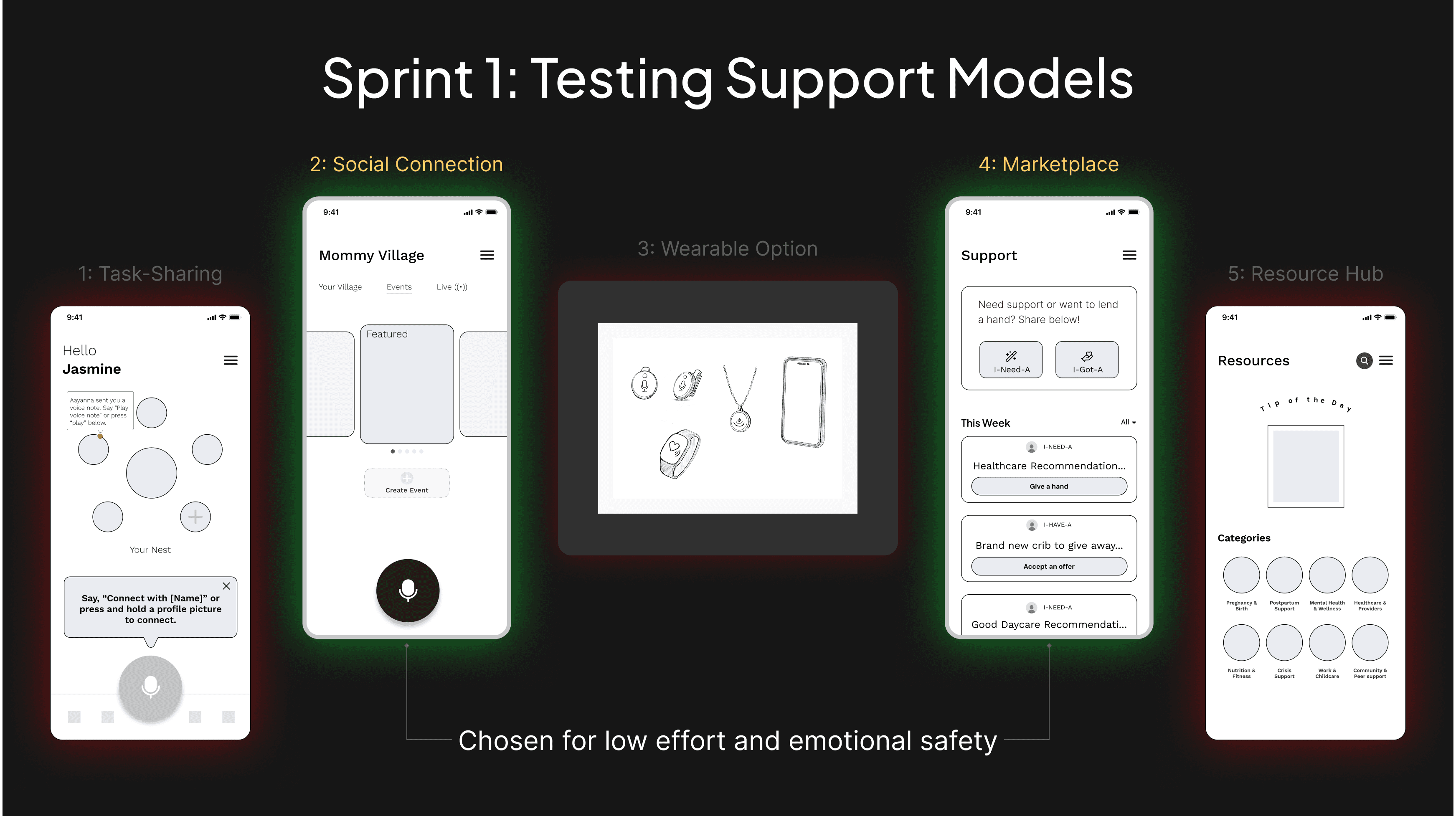
Sprint 1 Broad Vision: We designed a wearable and mobile app combining task-sharing, emotional check-ins, event discovery, and community donations. Moms responded positively to the concept. But what they said was more important than what they liked: they needed support, not features. Social connection was the real gap.
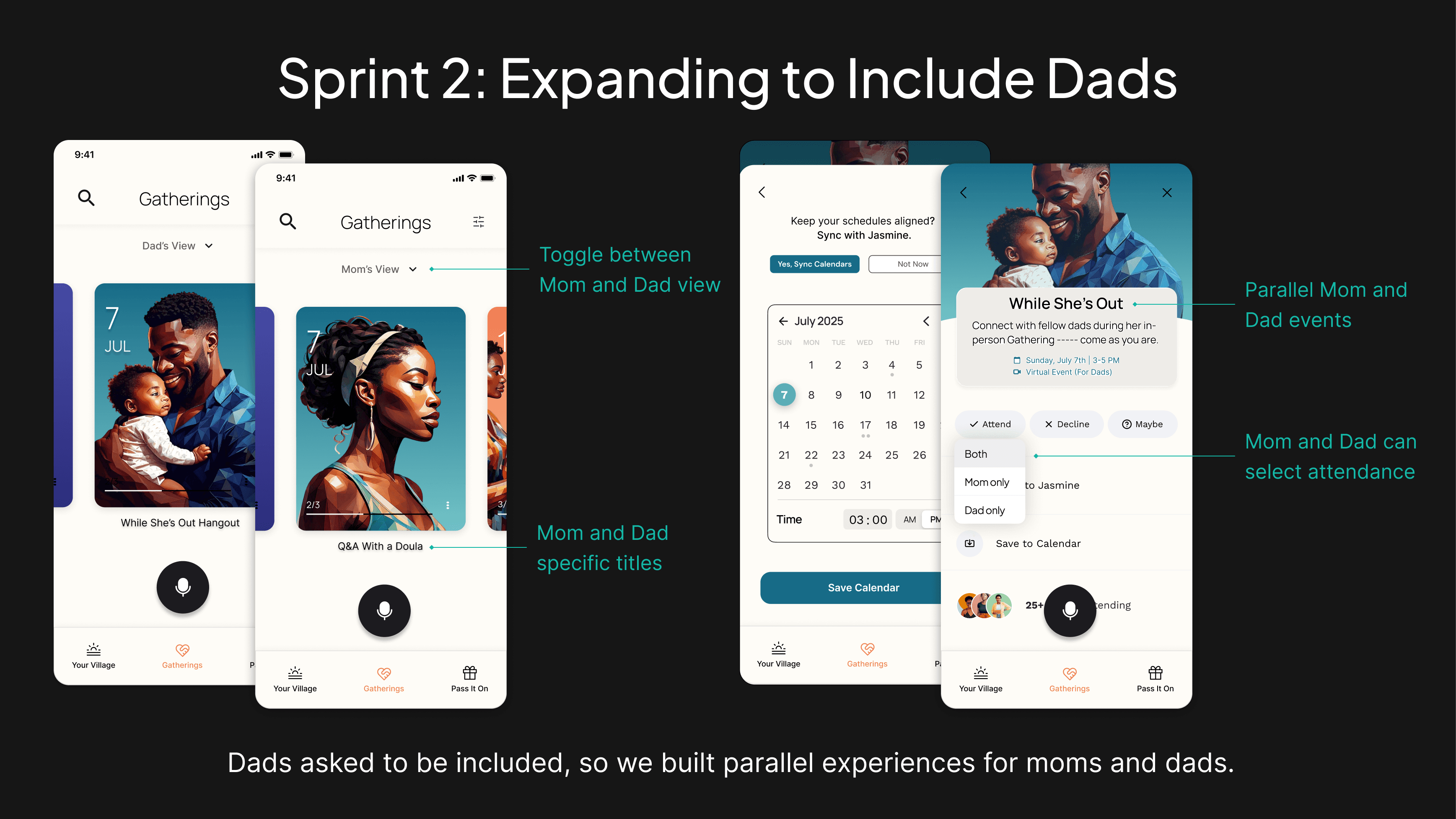
Sprint 2 Designing With Dads: We brought Black fathers into the process. They wanted to support their partners but felt unsure how. We redesigned around that insight, adding shared calendars, virtual events for dads, and gender-neutral tones. The lesson: getting dads into the app was only half of it. They also needed guidance on how to show up.
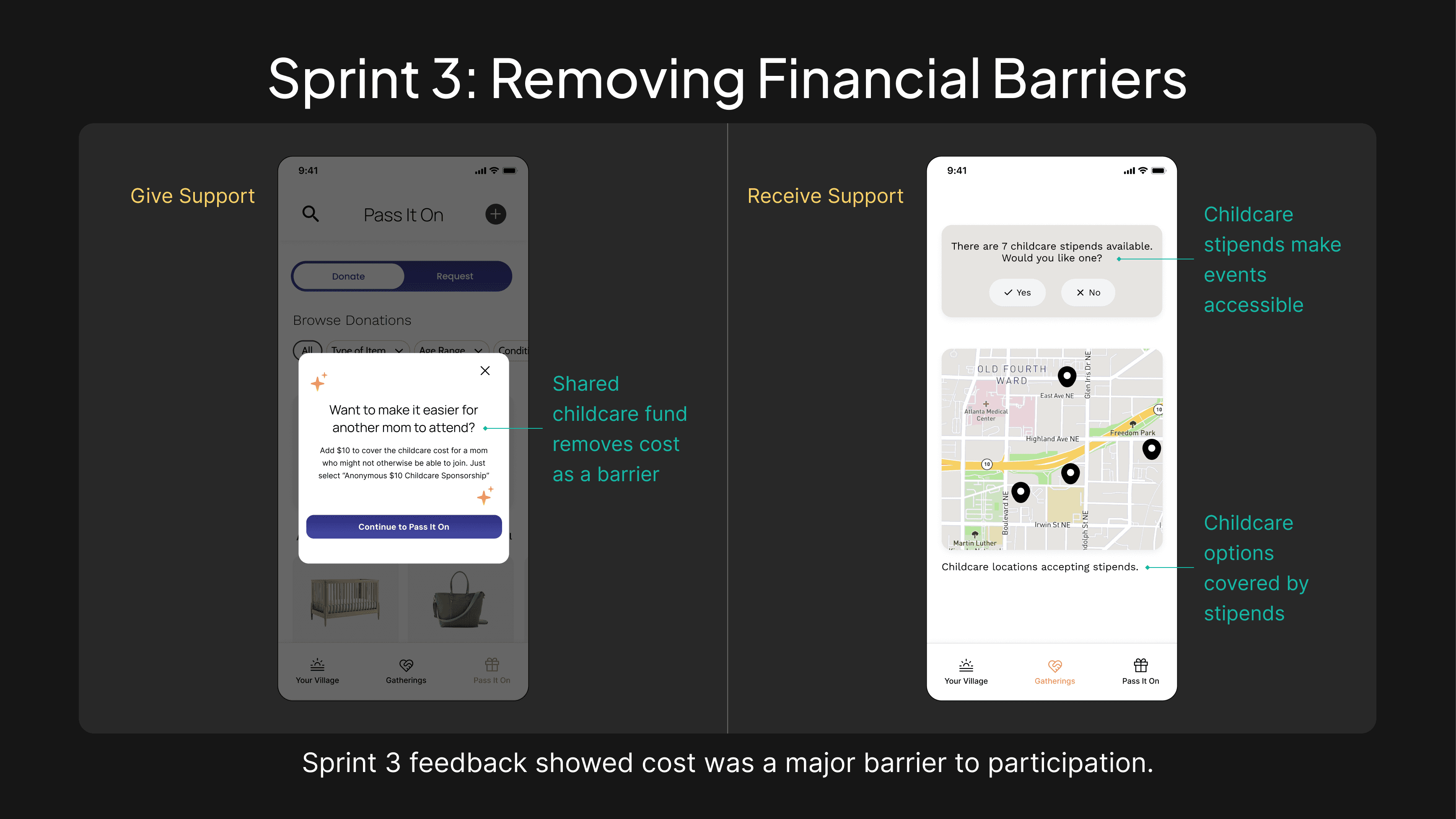
Sprint 3 Refinement: Cognitive walkthroughs with moms and HCI experts surfaced three specific issues; childcare finder needed ratings, request flows were too nested, and donations needed flexible amounts. We incorporated those changes and moved into high-fidelity.
Research Impact
Research-Informed Direction
Every major product direction came from what participants told us.
Voice-first interaction emerged from participants describing exhaustion and cognitive overload. They didn't have the bandwidth for complex interfaces.
Father-inclusive features emerged from a finding that kept surfacing across focus groups and the co-design workshop. Fathers wanted to help. They just needed a way in.
Shared childcare coordination emerged from the single most repeated sentiment across all sessions: mothers were doing everything alone.
What We Learned
A pivot mid-project, when grounded in data, produces better outcomes than staying on a flawed path
Participatory workshops surface design directions faster when combined with rigorous prior synthesis
Research scope should stay open, the fathers finding changed everything


