2025
Bloom Social is a nonprofit platform for local discovery without ads or algorithms.
I served as a design researcher on this project, conducting mixed-methods research with 40+ participants to inform the Discovery tab experience. Using AI-assisted synthesis tools to accelerate analysis, our research reduced usability flags from 13 to 0 and produced designs Bloom later brought back to Develop for Good's engineering team for production build.
Role: Design Researcher
Team: PM + 5 designers + CEO + lead engineer
Client Project | May–August 2025

The Starting Point
Early data, limited insight
Early internal survey data suggested users felt overwhelmed by algorithm-driven platforms and wanted more control.
However, the sample was small and largely drawn from founders’ networks.
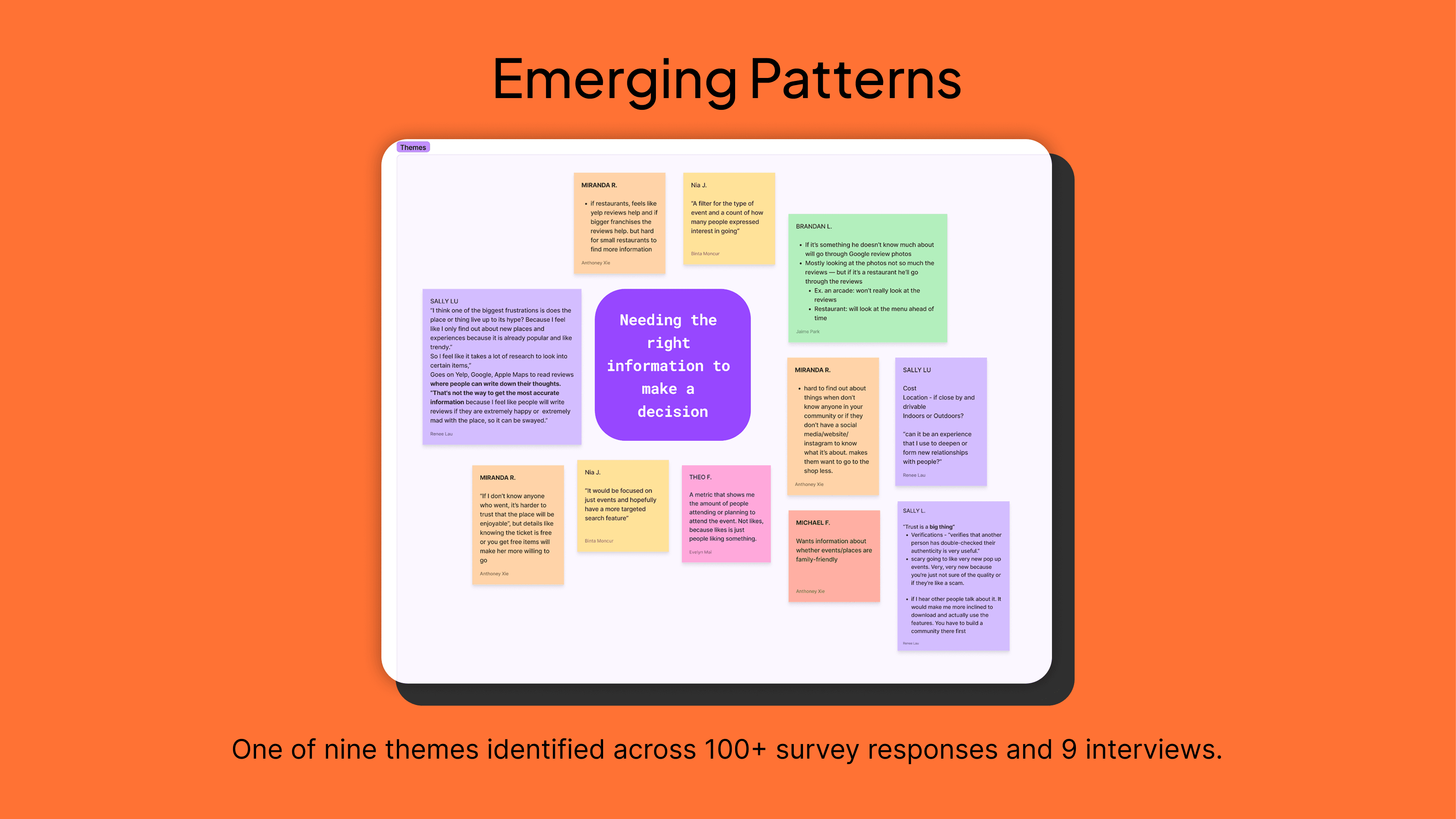
To validate assumptions, I led qualitative interviews and usability testing to surface broader behavioral patterns and unmet needs.
Research Changed the Audience
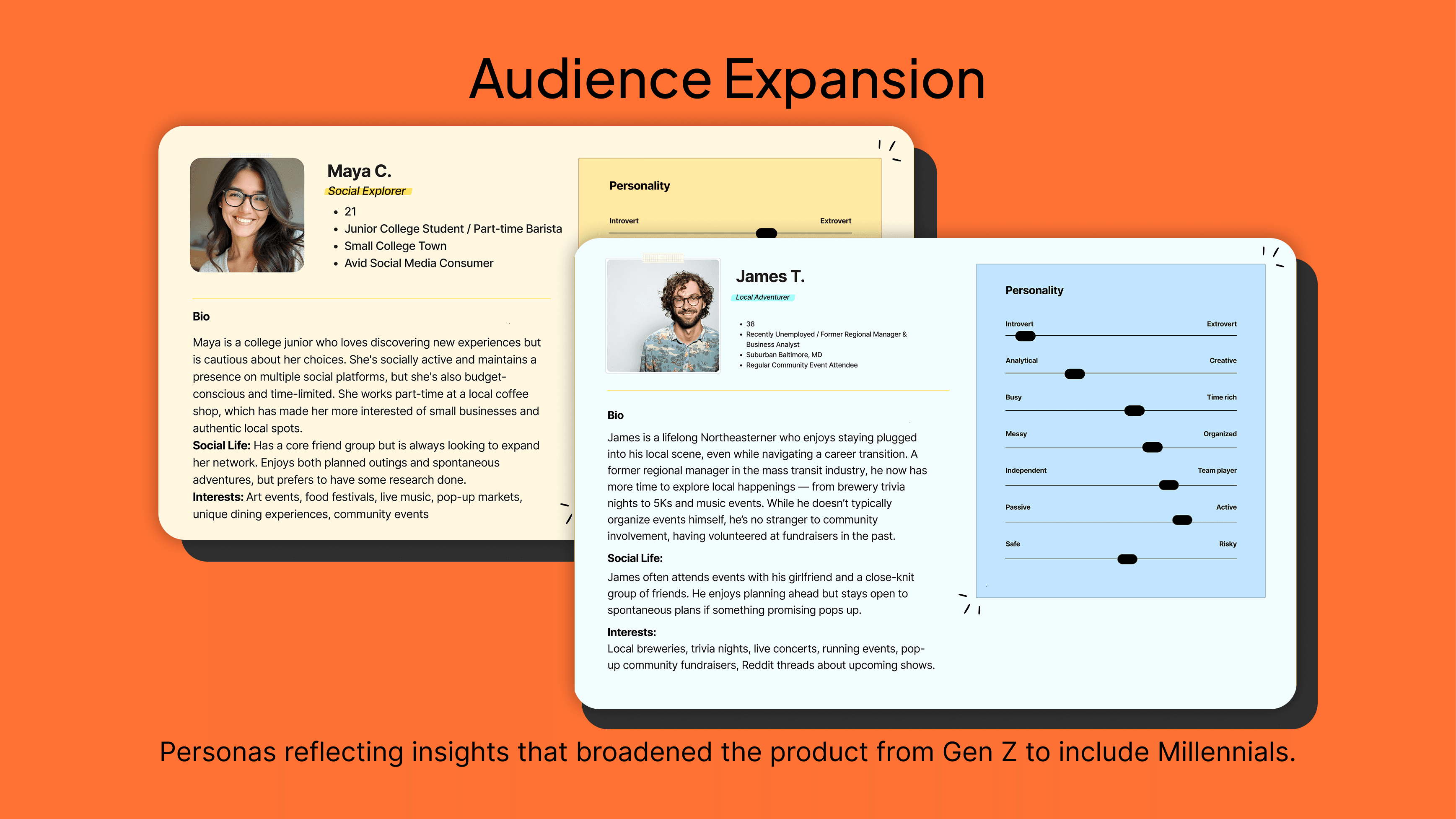
Discovery wasn’t just for Gen Z
Bloom initially targeted Gen Z only.
User interviews surfaced an unexpected pattern: Millennials were just as eager, especially for easier event planning.
“If I know my friends are going, I’m in. But planning is exhausting.”
This insight led us to:
Expand the target audience
Design dual discovery journeys instead of one
Reframe the problemfrom “trendy discovery” to reliable local planning
Turning Insights Into Product Decisions
Designing discovery that actually works
With a broader audience, clarity and accessibility became structural priorities.
Based on research findings, I led decisions around:
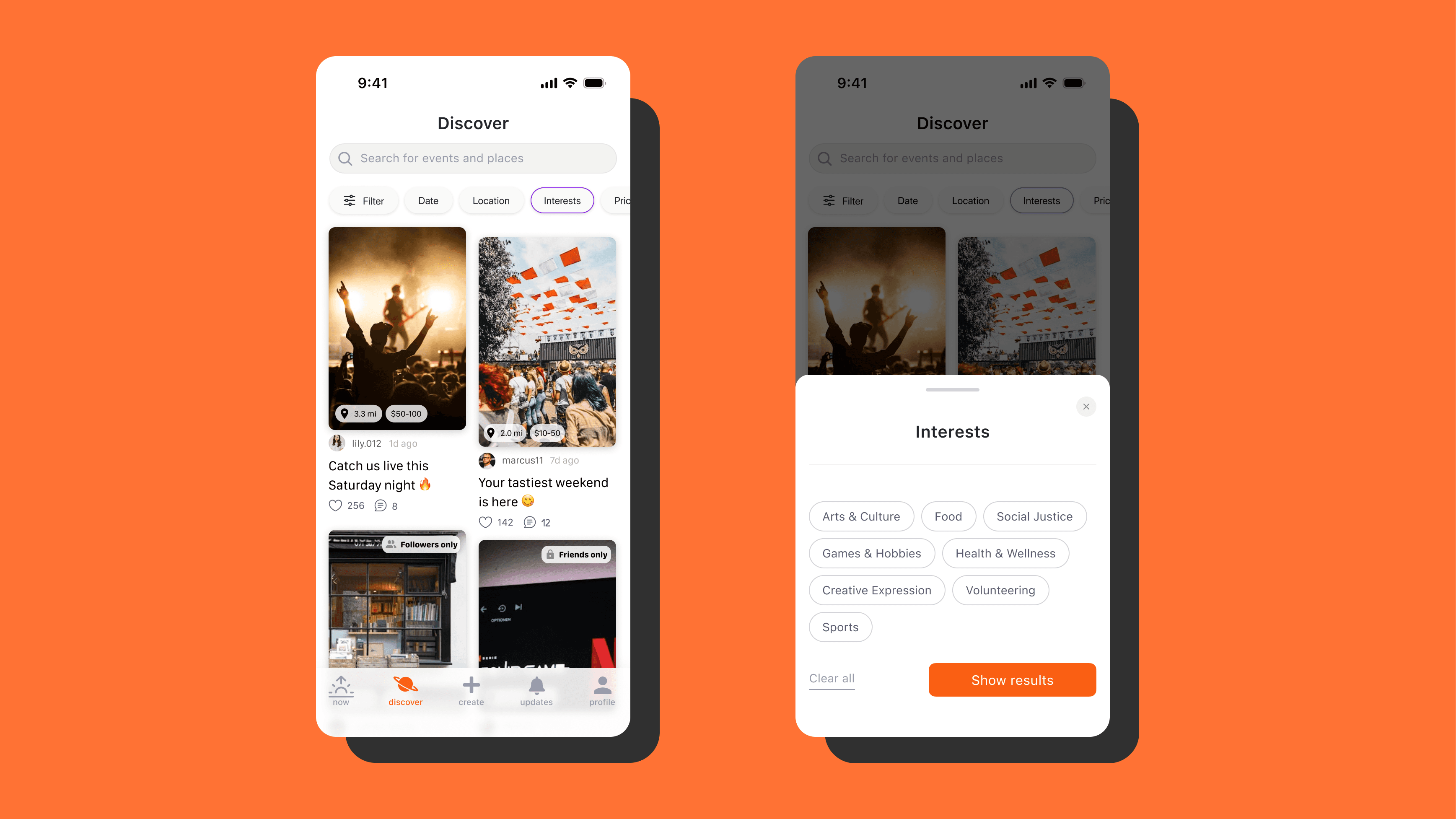
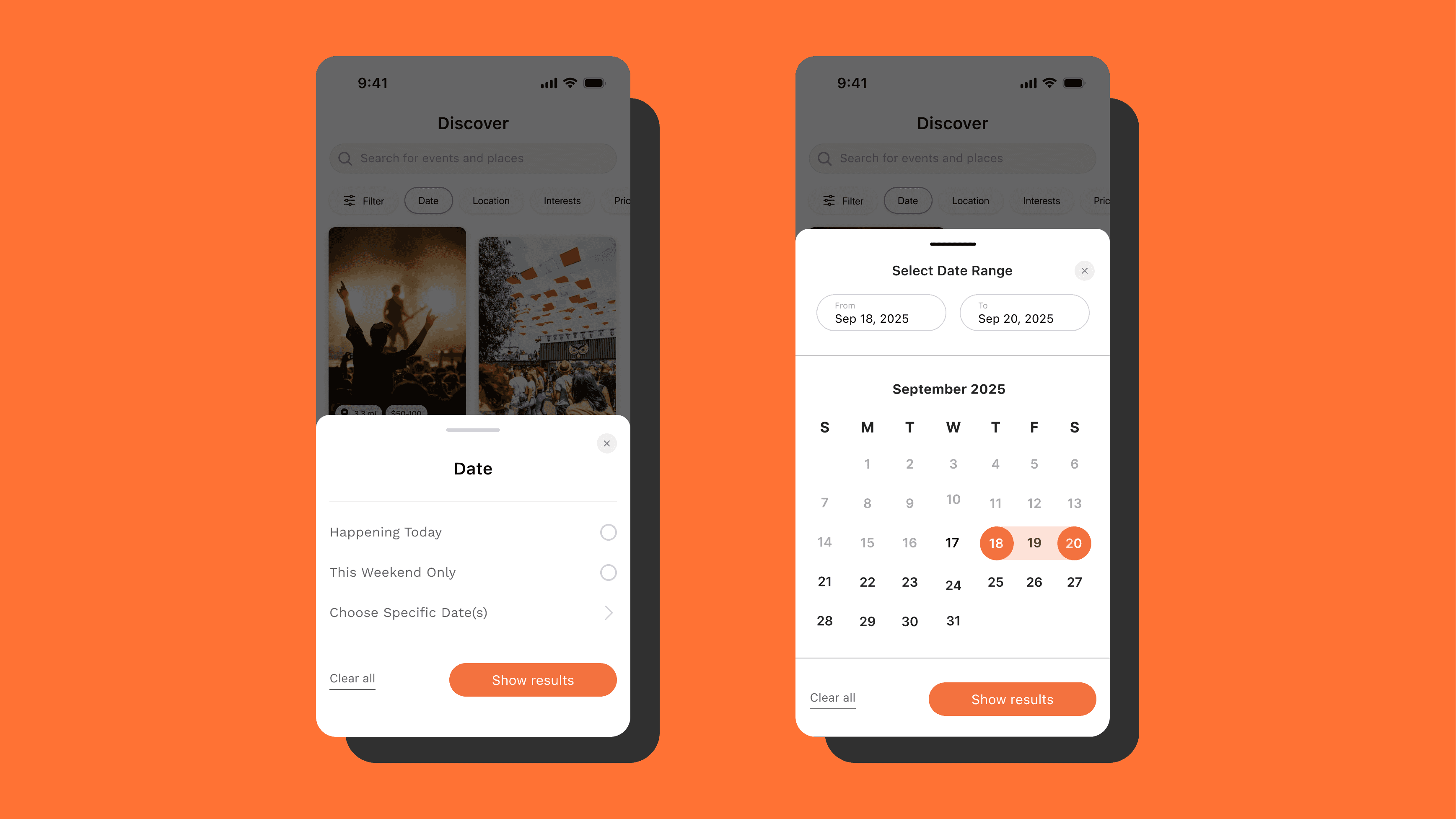
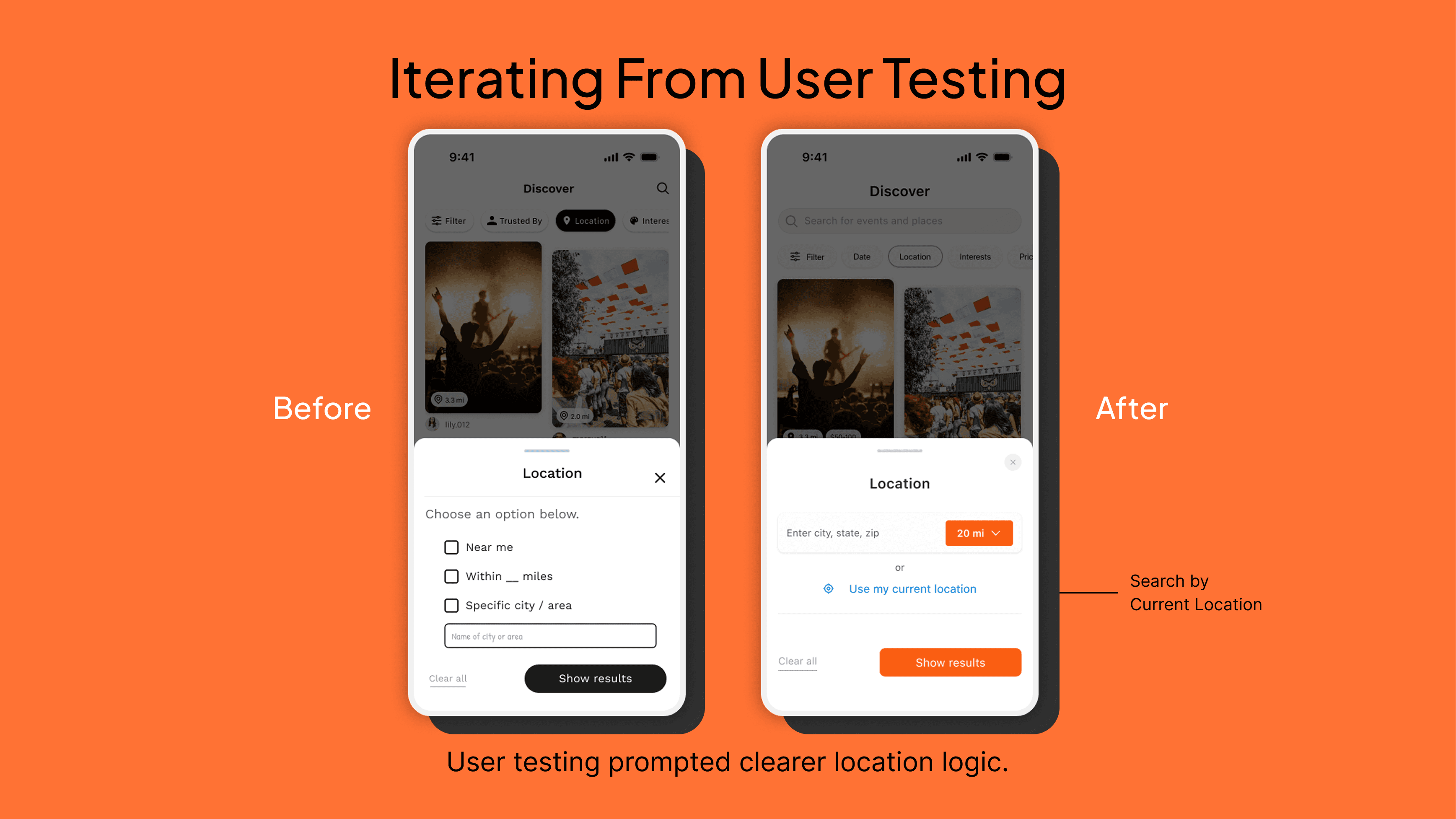
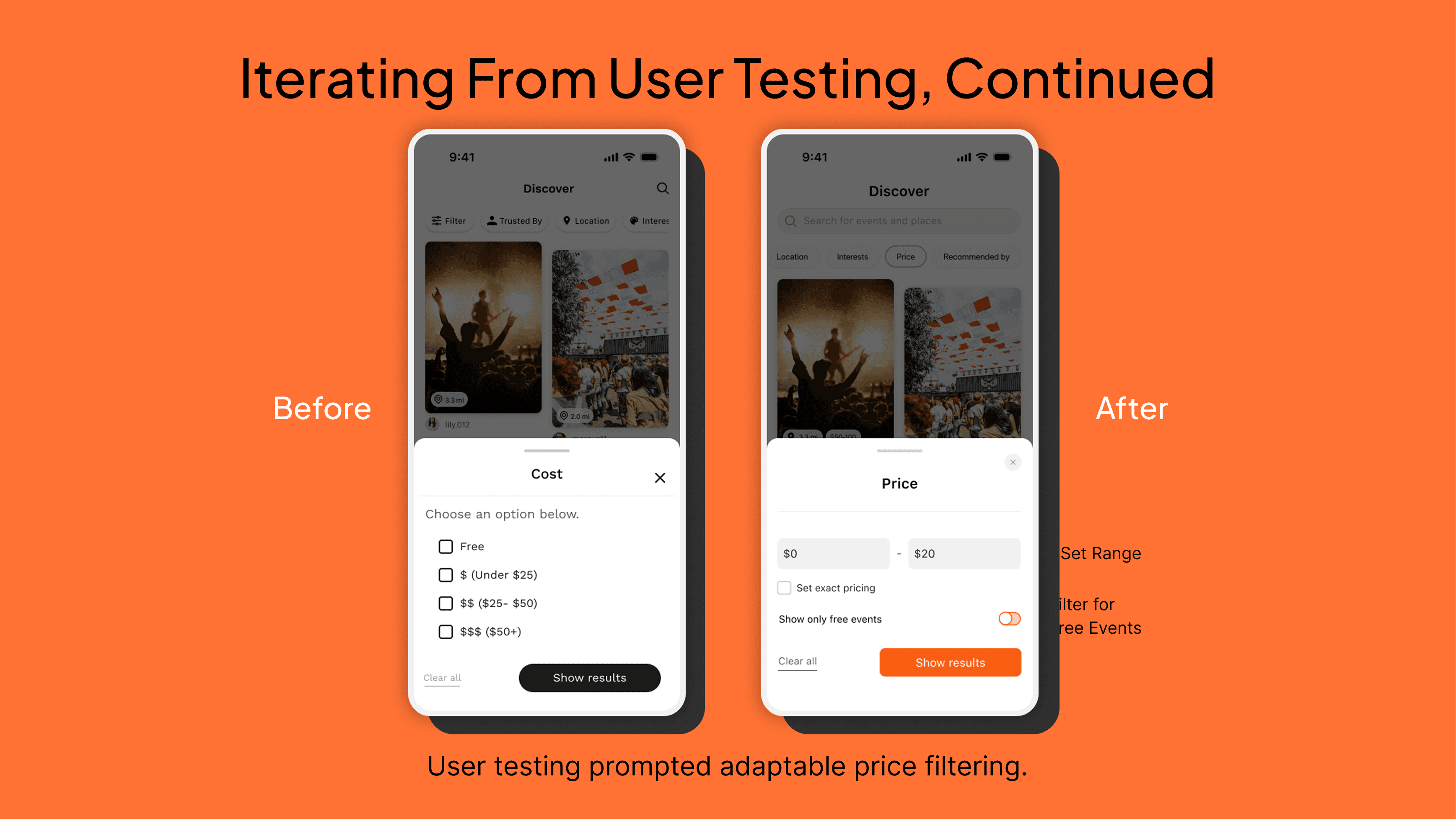
• Smart, multi-dimensional filters (location, time, cost, interest)
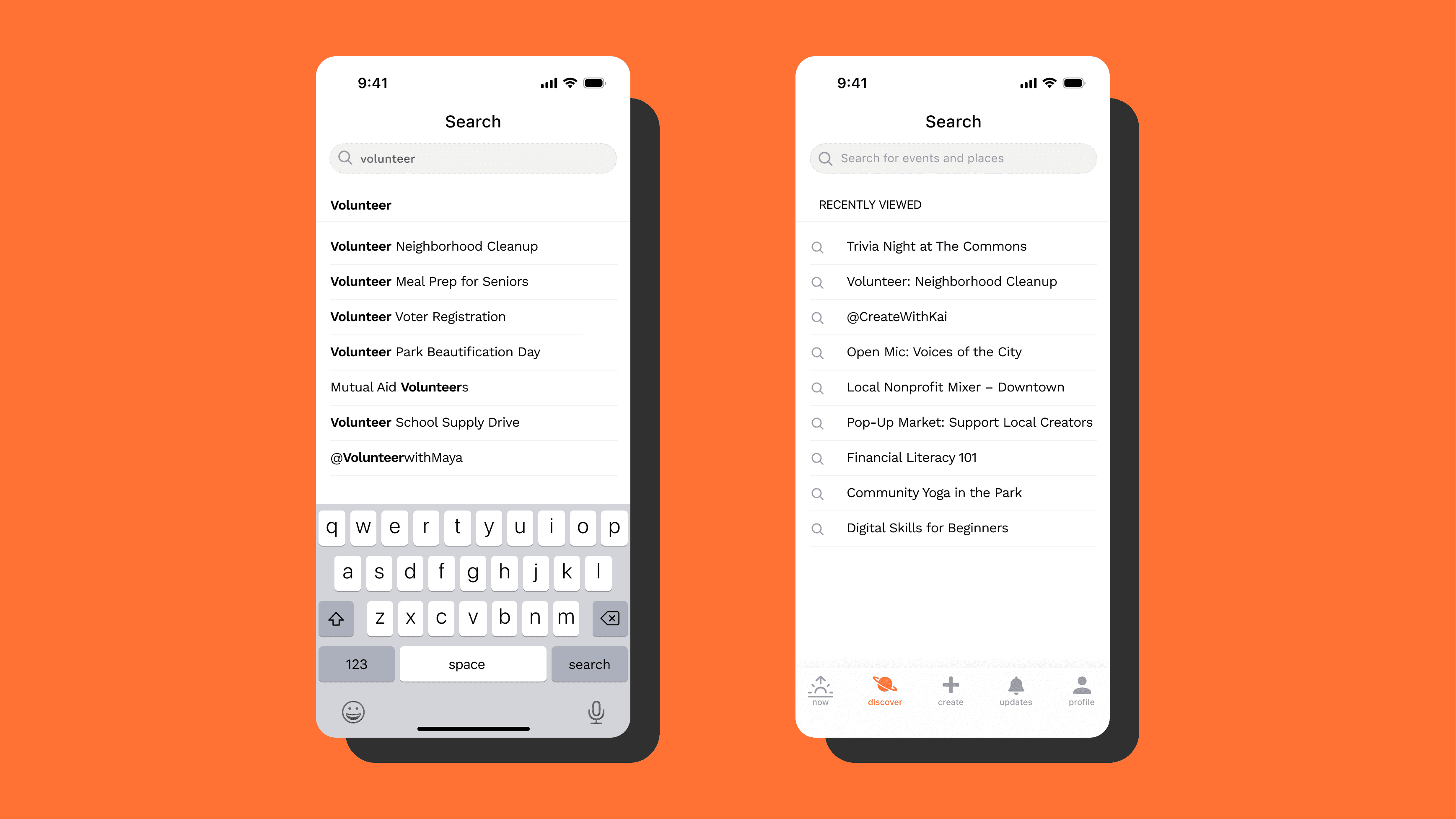
• Location-first search to reduce uncertainty
• Flexible pricing logic (free, range, exact)
• Predictive filter population during input
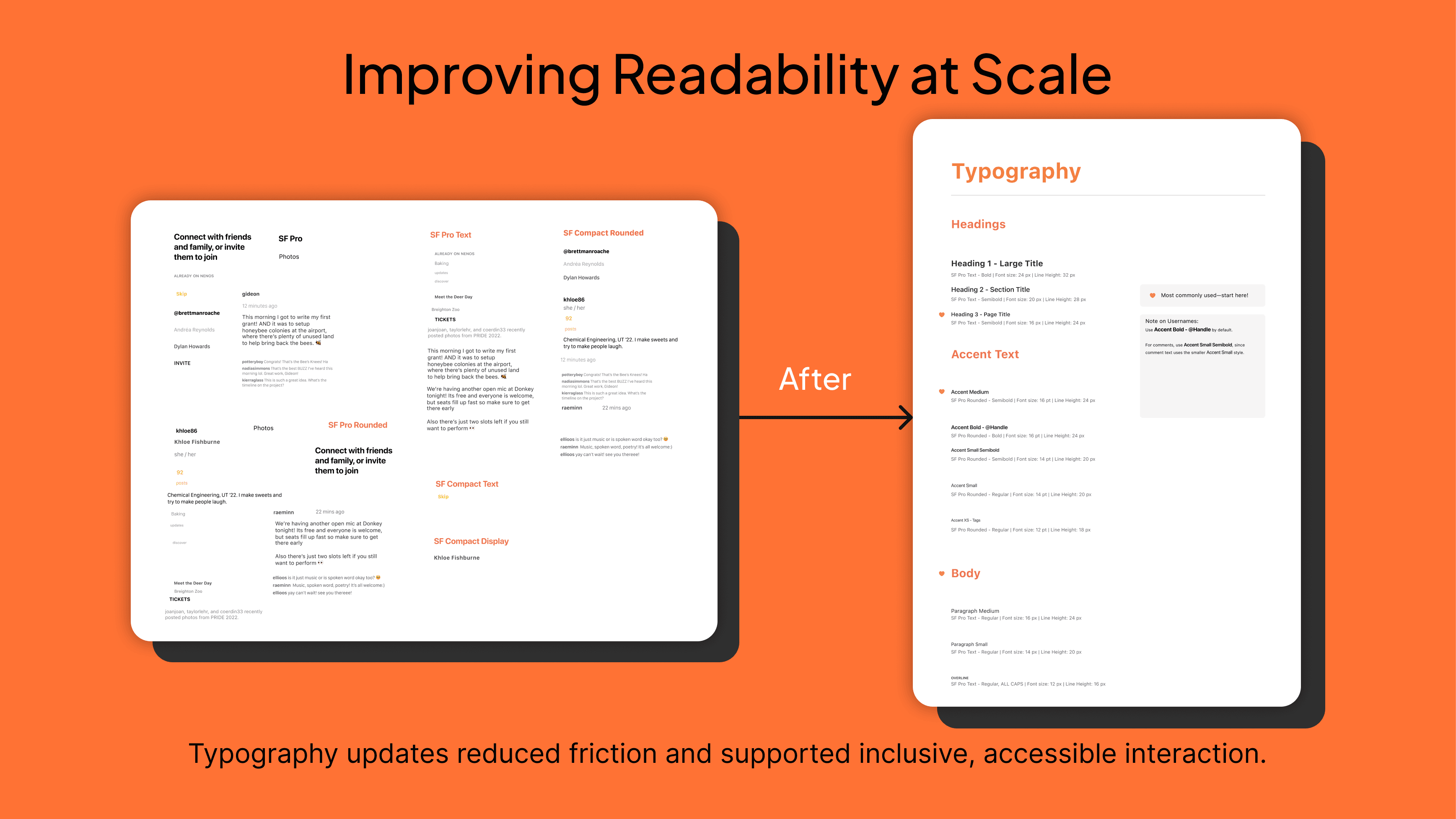
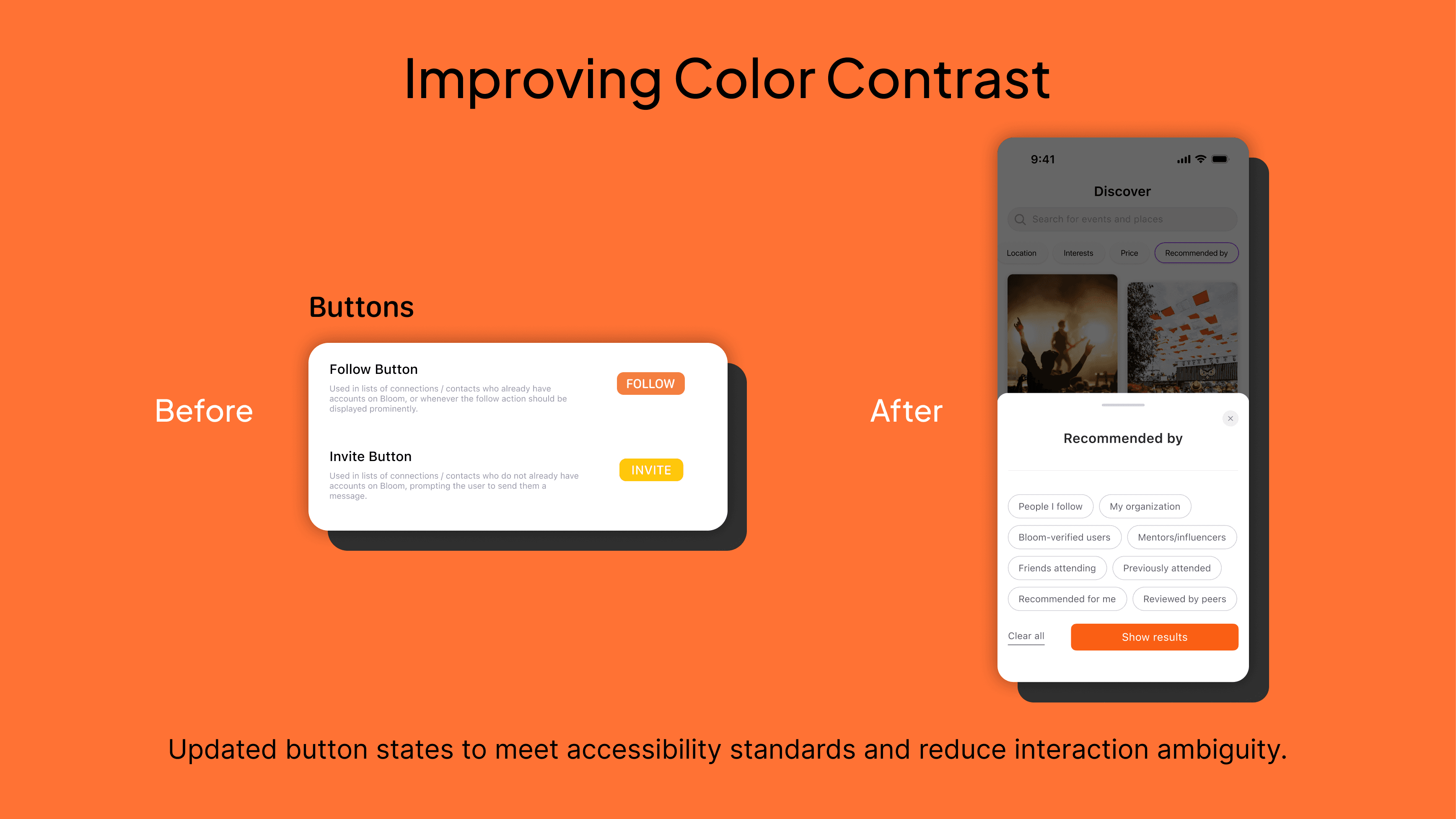
• WCAG-aligned typography and contrast improvements
These interventions reduced cognitive load while preserving user control, without introducing algorithmic feeds.
Impact & What This Taught Me
Impact
• 100% task completion in usability testing
• Reduced usability flags from 13 to 0
• Designs currently in active development for production release
What This Reinforced
• Research can redefine product audience